- Start with your skin, not your birthday
- A simple K-beauty routine for women over 40
- Morning: protect and keep it comfortable
- Evening: cleanse, then add only what you need
- Which K-beauty products are worth a place on your shelf?
- How to read popular ingredient claims
- Three ways to simplify the routine
- Frequently asked questions
- Do I need ten steps for K-beauty to work?
- Is K-beauty suitable during perimenopause or menopause?
- Can I combine Korean products with other skincare?
Korean skincare for women over 40 does not have to mean a ten-step routine. The useful part of K-beauty is the choice of textures and optional layers: you can add an essence or a richer overnight cream when your skin needs it, and leave them out when it does not. The basics remain a gentle cleanse, moisturizer, and daytime sun protection.
This guide explains what common K-beauty product categories do, how to put them in a practical order, and which steps you can skip. It does not rank products or claim that our editors personally tested them.
Start with your skin, not your birthday
Skin does not change on a fixed schedule at 40. Some people notice dryness or sensitivity; others still have oily or acne-prone skin. During menopause, dryness can become more noticeable, according to the American Academy of Dermatology (AAD). That is a reason to adjust your moisturizer and cleanser to your skin, not to buy every product marketed for “mature skin.”
Start with one concern you can describe clearly, such as tightness after cleansing, an uncomfortable sunscreen, or a moisturizer that feels too light. Add one optional product at a time so you can tell whether it suits you.
A simple K-beauty routine for women over 40
Morning: protect and keep it comfortable
- Cleanse only as needed. A mild cleanser can remove overnight oil; if washing twice a day leaves your skin dry, a water rinse in the morning may be enough. The AAD recommends a mild cleanser rather than harsh soap for mature, dry skin.
- Add an optional hydrating layer. A toner or essence is a lightweight product used before moisturizer. Choose one for the texture and ingredients you prefer. You do not need multiple layers, and “fermented” on the label is not proof of a special anti-aging result.
- Moisturize. A lotion may feel better on oily skin; a cream may suit dry skin. If you use a serum, moisturizer generally follows it. See our face-cream selection guide for a closer look at textures and ingredient labels.
- Finish with sunscreen. Look for broad-spectrum SPF 30 or higher and use it as directed. The FDA explains that sunscreen works alongside shade and protective clothing. The best formula for your routine is one you can apply consistently; country of origin alone does not establish better protection.
Evening: cleanse, then add only what you need
- Remove makeup and sunscreen. If one gentle cleanse removes them comfortably, a second cleanser is optional. Double cleansing is a method, not a requirement.
- Use one optional treatment. If you want to try a retinol or another active product, introduce it gradually and follow the label. The AAD advises starting retinoids slowly and using sun protection during the day. If your skin is easily irritated or you have a skin condition, seek individual advice from a dermatologist before adding strong actives.
- Moisturize. A richer cream or sleeping pack can be useful if your regular moisturizer does not feel comfortable overnight. It is an optional final layer, not a way to make earlier products work harder.
For a broader routine that is not specific to K-beauty, read our anti-aging skincare routine guide.
Which K-beauty products are worth a place on your shelf?
Use this quick checklist to decide by function rather than by the number of steps on a product page.
- Essence or toner: Consider one if you like a light layer before moisturizer. Skip it if your moisturizer already leaves your skin comfortable.
- Serum or ampoule: Pick a formula for one specific goal and read the full ingredient list. “Ampoule” describes a product format; it does not guarantee a stronger or more effective formula.
- Moisturizer: Choose the texture that suits your skin. A fragrance-free option may be easier to tolerate if fragrance bothers you.
- Sleeping pack: Think of it as an optional overnight moisturizer. Skip it if your existing cream is enough or a heavier layer feels uncomfortable.
- Sunscreen: Check the stated broad-spectrum protection and SPF, then follow the directions on the product sold in your market.
How to read popular ingredient claims
Ingredient names can help you compare formulas, but a name alone cannot predict what a finished product will do on your skin. Concentration, the rest of the formula, and your tolerance also matter.
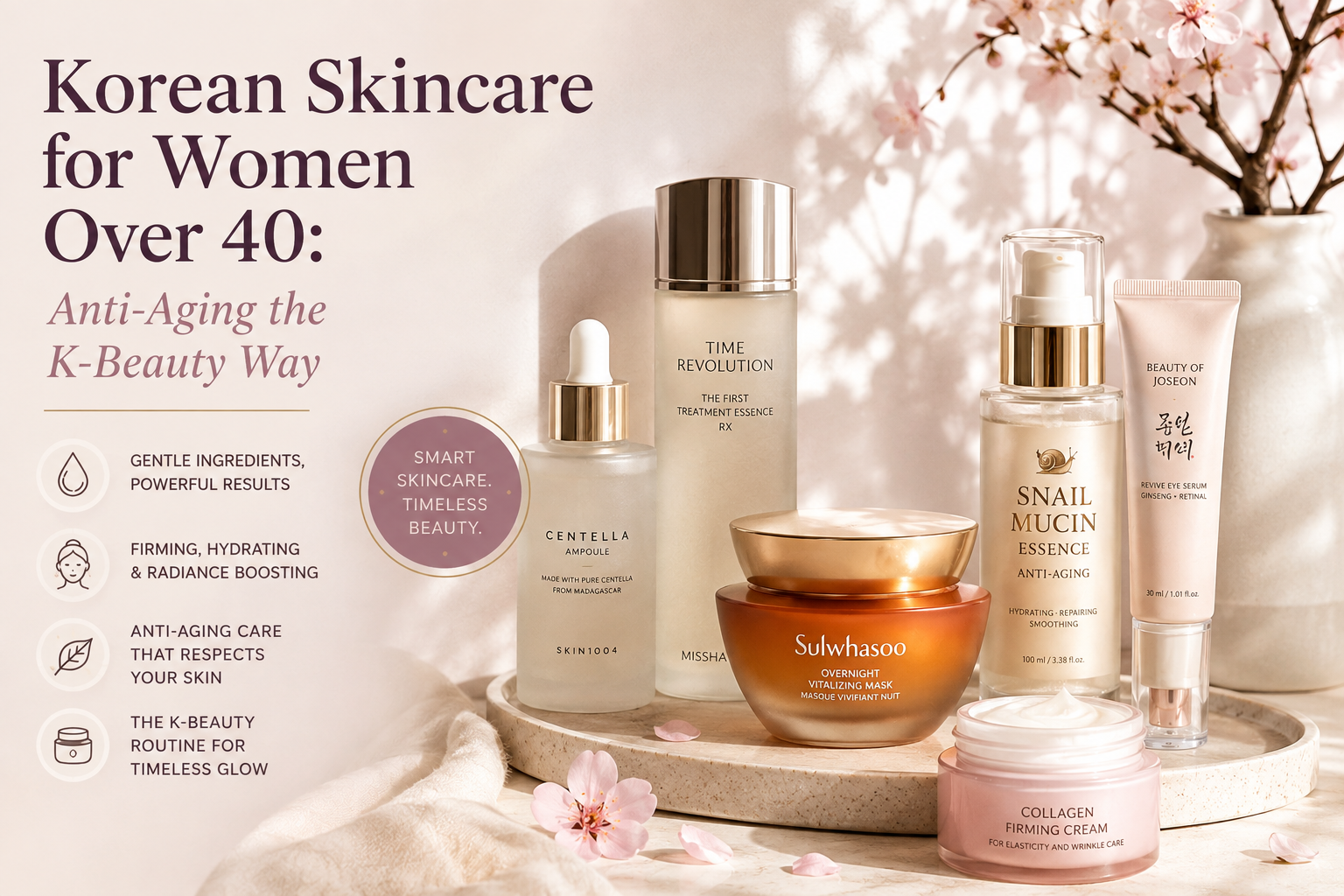
- Snail mucin and fermented extracts: These appear in many K-beauty essences. Choose them if you like the formula and tolerate it; do not assume they rebuild collagen or repair damaged skin.
- Centella asiatica: Often marketed in products for sensitive skin. Check the complete formula, including fragrance and other actives, instead of assuming that “cica” makes any product irritation-free.
- Peptides and adenosine: Common in products marketed for fine lines. Avoid promises of a fixed percentage of wrinkle reduction or a guaranteed timeline when comparing labels.
- Retinol: It can irritate some skin. If you use it, start slowly and keep your daytime sunscreen routine in place. It does not need to be paired with every other active in the same week.
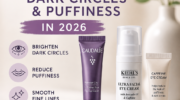
If dark circles or puffiness are your main concern, our eye-cream comparison explains what those products can and cannot reasonably address.
Three ways to simplify the routine
- Skin feels dry: Try a gentler cleanser and a more comfortable moisturizer first. Add an essence only if you enjoy the extra layer.
- Skin reacts easily: Keep the routine short, introduce one new product at a time, and stop using a product that irritates you.
- You want fewer products: Use cleanser, moisturizer, and daytime sunscreen. No essence, ampoule, mask, or separate eye cream is mandatory.
Frequently asked questions
Do I need ten steps for K-beauty to work?
No. A short routine is easier to keep consistent. Extra layers are optional choices based on texture and personal preference.
Is K-beauty suitable during perimenopause or menopause?
It can be, but “K-beauty” is a broad category, not a treatment for hormonal changes. If your skin becomes drier, the AAD recommends mild cleansing and moisturizing. Persistent or troubling symptoms deserve individual medical advice.
Can I combine Korean products with other skincare?
Yes. Choose products for their formula and how your skin responds, rather than their country of origin. When using a treatment such as retinol, follow its directions and avoid introducing several strong products at once.
Editorial note: Lady Life Magazine Editorial Team prepared this general shopping and routine guide using the sources linked above. We have not personally tested or medically reviewed the products or ingredients discussed here, and we do not promise a specific result.