Affiliate disclosure: This article contains Amazon links. If you purchase through them, Lady Life Magazine may earn a commission at no extra cost to you. We compared published product labels and manufacturer information. We did not personally test these eye creams or obtain a medical review.
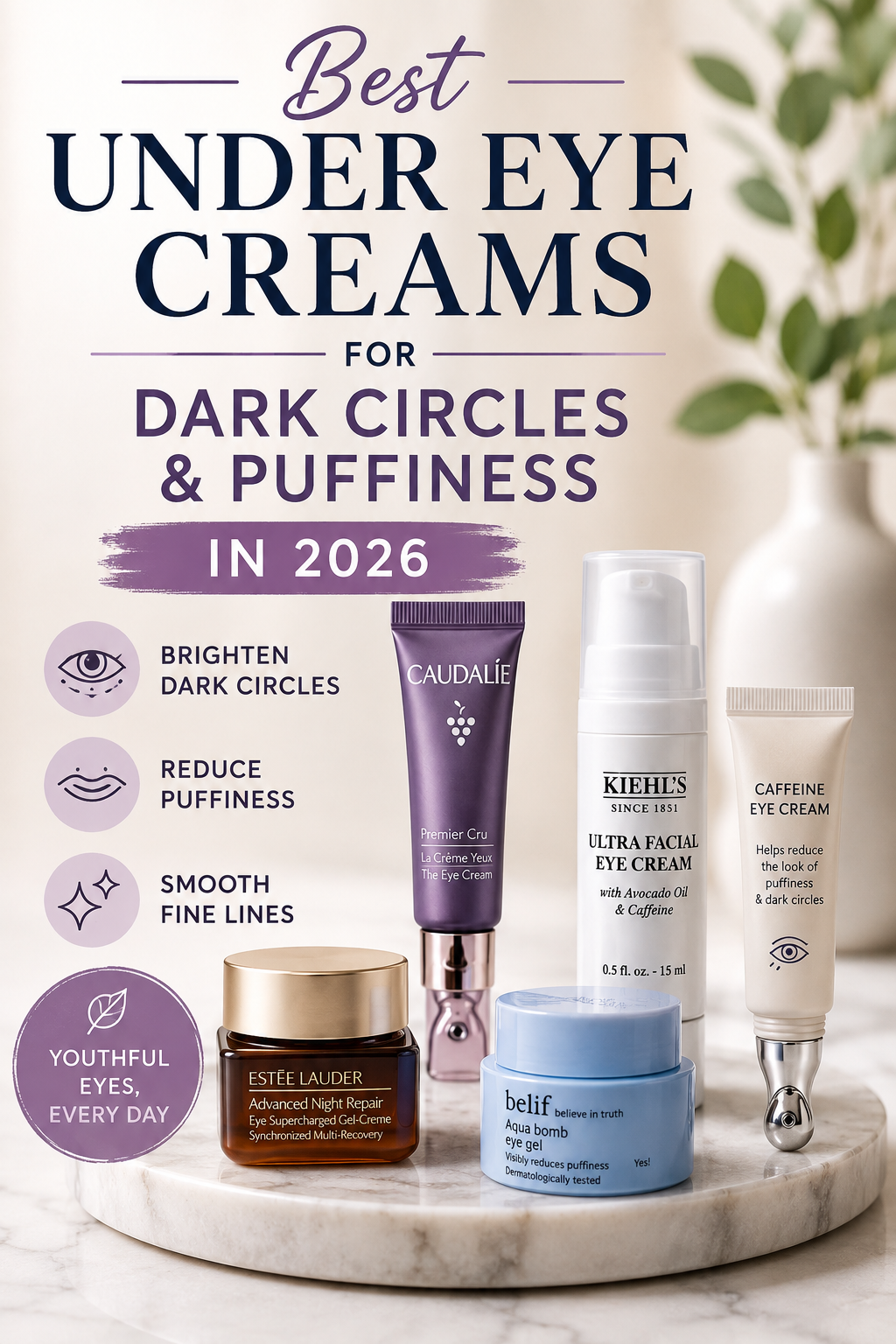
Eye creams for dark circles and puffiness are easier to compare when you separate hydration, a light gel texture, and a retinol formula. Dark circles can have several causes, including shadows, pigmentation, and irritation; one product cannot address them all. This guide compares three identifiable products and their trade-offs without claiming a guaranteed result or a “best overall” winner.
Eye cream comparison at a glance
| Product | Best for | Published features | Main caution |
|---|---|---|---|
| Neutrogena Hydro Boost+ Caffeine Eye Gel Cream | A fragrance-free gel texture | Caffeine, hyaluronic acid, peptide complex; brand label | Its ingredient list does not show that it will eliminate every cause of dark circles |
| Neutrogena Rapid Wrinkle Repair Retinol Eye Cream | Comparing a retinol-containing eye product | Retinol and hyaluronic acid; brand page | Retinol can irritate sensitive skin |
| e.l.f. Holy Hydration! Eye Cream | A richer moisturizing cream without retinol | Hyaluronic acid and peptides; brand page | A richer feel may not suit someone who prefers a gel |
Before buying: what an eye cream can and cannot do
According to Cleveland Clinic, dark circles can have different causes, including genetics, lack of sleep, irritation, pigmentation, and shadows from changes around the eye. A moisturizer may improve how dry skin looks and feels, but an ingredient list alone cannot show that a cream will remove a shadow or treat an underlying condition. If swelling or discoloration is new, persistent, or concerning, seek individualized advice.
For daytime skin care, remember sun protection. If you are considering retinol, the American Academy of Dermatology’s retinoid guidance discusses gradual introduction, irritation, and situations in which it is inappropriate.
Three products to compare
Neutrogena Hydro Boost+ Caffeine Eye Gel Cream
Best for: Someone who wants a lighter, fragrance-free gel. Pros: the manufacturer lists caffeine, hyaluronic acid, and a peptide complex; its gel format differs from a rich cream. Cons: no cream can be assumed to correct every kind of dark circle. Who should skip: someone who wants a richer cream or who reacts to an ingredient on the current label. Check the exact 0.5 oz product and seller.
Check the current Neutrogena caffeine eye gel listing on Amazon.
Neutrogena Rapid Wrinkle Repair Retinol Eye Cream
Best for: Someone specifically comparing a retinol eye product for the appearance of fine lines. Pros: the brand identifies retinol and hyaluronic acid in this version. Cons: retinol can cause irritation; start only as directed and consider how it fits with other products. Who should skip: anyone advised to avoid retinoids, or whose eye area is already irritated. Check the AAD guidance if unsure.
Check the current Neutrogena retinol eye cream listing on Amazon.
e.l.f. Holy Hydration! Eye Cream
Best for: Someone who wants a richer moisturizing eye cream without choosing retinol. Pros: the manufacturer lists hyaluronic acid and peptides and describes a cream texture. Cons: a richer finish may not appeal to everyone, and the product’s marketing claims are not proof it will treat a particular cause of dark circles. Who should skip: someone seeking a light gel or avoiding a listed ingredient. Confirm the current package size before checkout.
Check the current e.l.f. Holy Hydration eye cream listing on Amazon.
How to choose for your main concern
- Dry-looking skin: compare moisturizers first, paying attention to texture and comfort.
- Morning puffiness: a light gel may be more comfortable than a rich cream, but it is not a treatment for every cause of swelling.
- Fine lines: a retinol product is a different choice from a plain moisturizer and may be irritating.
- Dark circles: consider that pigment, irritation, and facial shadows are different issues. A “dark circle” label does not tell you which applies to you.
For the rest of your routine, see our skincare routine guide. If you are also comparing a face moisturizer, see the face cream comparison for women over 40.
Editorial note and sources
Prepared by the Lady Life Magazine Editorial Team from the linked product pages, Cleveland Clinic’s overview of dark circles, and AAD retinoid guidance. No team member personally tested these products and no doctor reviewed this comparison. Ingredients, package sizes, and retailer listings can change; verify them before purchase.