
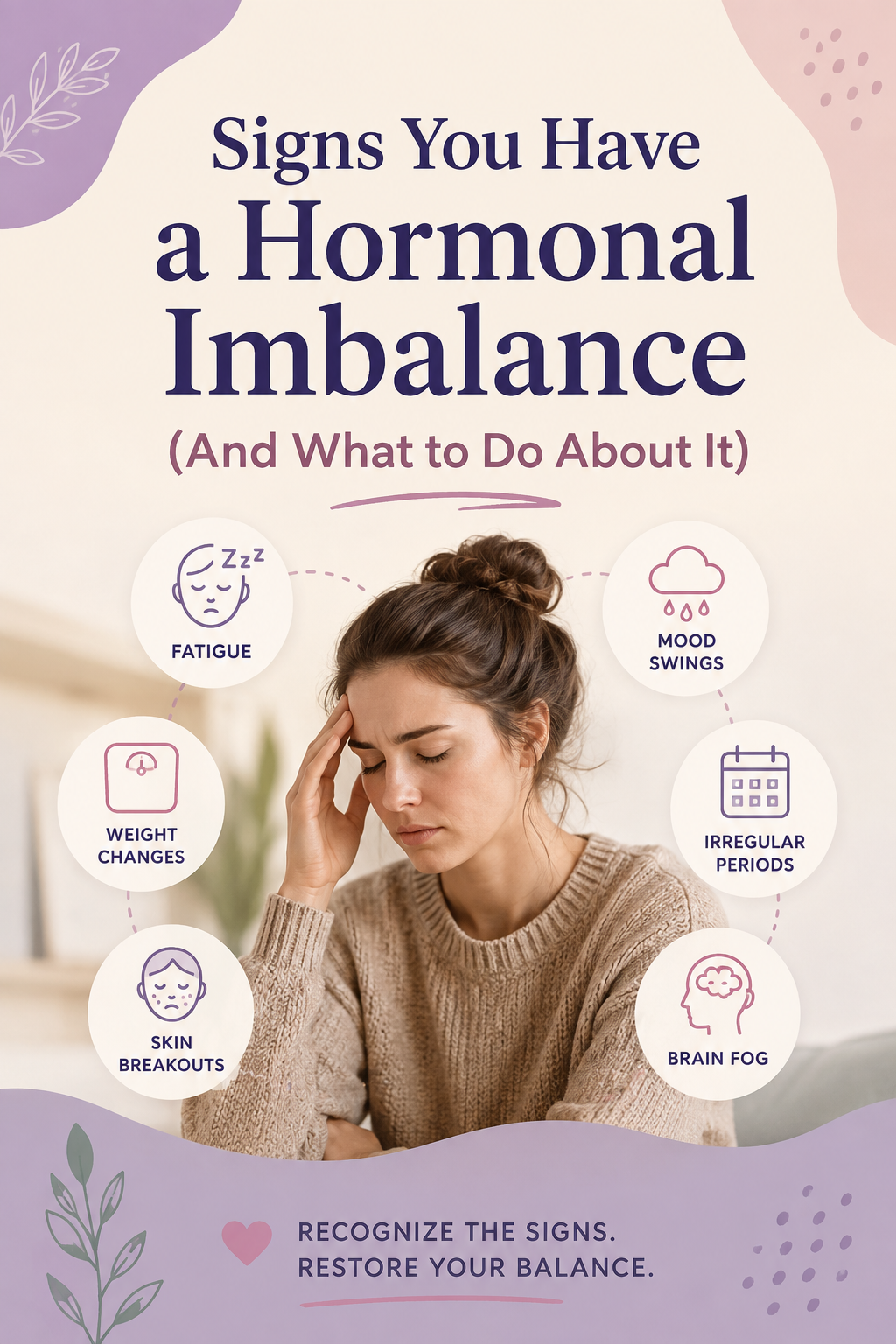
Signs You Have a Hormonal Imbalance (And What to Do About It)

Signs You Have a Hormonal Imbalance (And What to Do About It)
Fatigue, weight gain, mood swings, skin changes — these could all be signs of a hormonal imbalance. Learn the 10 most common symptoms, what causes them, and what you can actually do.

Hormonal imbalance is one of those diagnoses that sounds vague until you start connecting the dots. Fatigue that sleep doesn’t fix. Weight that appeared without explanation. Mood swings that feel disproportionate. Skin that’s suddenly behaving differently. These symptoms are wide-ranging precisely because hormones regulate nearly every process in the body — and even small fluctuations produce effects that ripple across multiple systems simultaneously.

What a Hormonal Imbalance Actually Means

A hormonal imbalance occurs when you have too much or too little of one or more hormones in your bloodstream. Hormones are chemical messengers — estrogen, progesterone, testosterone, cortisol, insulin, thyroid hormones (T3, T4) — and they govern metabolism, mood, sleep, reproduction, skin health, bone density, and more. The most commonly imbalanced hormones in women are estrogen, progesterone, testosterone, cortisol, and thyroid hormones.

10 Signs That Might Indicate a Hormonal Imbalance

1. Fatigue That Doesn’t Respond to Sleep

Tired after a poor night’s sleep is normal. Exhausted regardless of how much sleep you get is not. Chronic fatigue unresponsive to rest is one of the most common signs of hormonal disruption — particularly low thyroid function, adrenal dysregulation from elevated cortisol, or low progesterone. If you wake up tired and rely on caffeine to get through a predictable mid-afternoon crash, your hormones are worth investigating.

2. Unexplained Weight Changes

Weight gain concentrated in the midsection despite no changes in diet or activity is a classic hormonal pattern. Elevated cortisol promotes abdominal fat storage. Insulin resistance causes storage rather than burning of glucose. Low thyroid function slows metabolism. Declining estrogen in perimenopause shifts fat distribution toward the waist. Weight loss without trying can indicate overactive thyroid. Neither direction of unexplained change should be dismissed.

3. Irregular, Heavy, or Absent Periods

The menstrual cycle is a direct reflection of hormonal health. Cycles shorter than 21 days or longer than 35, periods that are unusually heavy or light, or periods that disappear entirely outside of pregnancy — all suggest disruption. Common causes include PCOS, thyroid dysfunction, elevated prolactin, low body fat from over-exercise, or perimenopause.

4. Mood Changes, Anxiety, and Irritability

Estrogen and progesterone directly influence brain chemistry — specifically serotonin, dopamine, and GABA, the neurotransmitters that regulate mood. When these hormones fluctuate significantly (premenstrually, postpartum, or during perimenopause), mood instability, anxiety, and irritability follow. Cortisol imbalance compounds this — chronic stress keeps cortisol elevated, which produces anxiety and emotional reactivity that feels disproportionate to circumstances.

5. Skin Changes: Acne, Dryness, or New Sensitivity

Skin responds directly to hormonal changes. Elevated androgens cause the jawline and chin acne characteristic of hormonal imbalance. Declining estrogen reduces collagen and skin moisture, producing dryness and increased sensitivity. Low thyroid function creates rough, pale skin and hair loss. Significant skin changes without a change in skincare or environment suggest a hormonal root cause worth investigating.

6. Sleep Disruption Without Obvious Cause

Progesterone has sedative properties — it binds to GABA receptors in the brain. When progesterone declines (premenstrually, postpartum, during perimenopause), sleep quality deteriorates significantly. Night sweats from estrogen fluctuation disrupt sleep architecture further. If you’re waking at 3am regularly or finding it increasingly difficult to fall and stay asleep, hormones may be a factor.

7. Hair Loss or Excess Hair Growth

Hair thinning at the temples or crown often indicates elevated androgens, low thyroid, or iron deficiency from heavy periods. Excess facial or body hair (hirsutism) is a classic sign of elevated androgens as seen in PCOS. Postpartum hair loss is normal and typically resolves within six months — persistent thinning outside this context warrants investigation.

8. Digestive Issues That Worsen Cyclically

Many women notice digestive symptoms tracking their menstrual cycle — bloating, constipation, or loose stools premenstrually. Progesterone relaxes smooth muscle including the gut wall, slowing motility. Estrogen influences gut bacteria composition and intestinal permeability. The gut-hormone relationship also runs both ways — an imbalanced microbiome impairs estrogen metabolism and can contribute to estrogen dominance.

9. Decreased Libido

Low sexual desire in women is frequently hormonal. Testosterone plays a critical role in female libido (often overlooked because it’s thought of as a male hormone). Estrogen maintains vaginal tissue health and sensitivity. When either declines significantly — postpartum, during perimenopause, or with certain hormonal contraceptives — interest in sex often decreases alongside physical discomfort.

10. Brain Fog and Cognitive Changes

Difficulty finding words, forgetting things that should be automatic, feeling mentally slow — these are recognized features of hormonal changes, particularly estrogen decline during perimenopause. Thyroid dysfunction also produces significant brain fog frequently mistaken for depression or early dementia. These cognitive symptoms typically improve as hormone levels stabilize or with appropriate support.

What You Can Do: Practical Starting Points

Testing

A comprehensive hormonal panel typically includes TSH, free T3, free T4, estradiol, progesterone, testosterone (free and total), DHEA-S, morning cortisol, fasting insulin, and fasting glucose. Timing matters — many hormones fluctuate throughout the menstrual cycle, so specific cycle-day testing is often required.

Lifestyle Foundations

Seven to nine hours of sleep is non-negotiable for hormonal regulation. Reducing refined carbohydrates stabilizes insulin and reduces downstream androgen effects. Supporting gut health with fermented foods and dietary fiber improves estrogen metabolism. Managing chronic stress directly reduces cortisol-driven hormonal disruption.

Supplements That Support Hormonal Balance

Magnesium glycinate — supports adrenal function, sleep, and PMS symptom reduction.

Magnesium glycinate supplement

magnesium glycinate

Vitamin D3 + K2 — vitamin D acts as a hormone precursor influencing estrogen, testosterone, and thyroid function.
Vitamin D3 K2 supplement

vitaminK2+D3

Ashwagandha — may help reduce stress and cortisol levels and support the body’s response to stress. Some research also suggests it may influence thyroid hormone levels, although more evidence is needed to determine who may benefit.

Ashwagandha supplement

Youtheory Ashwagandha

ORGANIC INDIA Ashwagandha Capsules

B Complex (activated forms) — provides essential B vitamins in readily usable forms that support energy production, nervous system function, hormone metabolism, and the body’s natural methylation processes. Activated forms such as methylfolate and methylcobalamin may be especially useful for people who have difficulty converting certain B vitamins into their active forms.

B-complex vitamins

Thorne Basic B Complex

FAQ

Can a hormonal imbalance resolve on its own?
Some fluctuations normalize naturally — postpartum shifts typically stabilize within months. Others require active management. Thyroid conditions, PCOS, and menopausal hormone changes generally don’t resolve without intervention.

How long does it take to rebalance hormones?
Lifestyle changes typically show measurable improvements in three to six months. Medications and supplements may work faster for specific conditions. Consistency over months — not weeks — is the realistic timeframe.

Written by Lisa Johnson
Lisa Johnson is a Health & Family Writer at Lady Life Magazine, covering supplements, women's health, parenting, and family wellness. With a background in nutrition and family health, she brings a research-driven approach to every article — reviewing scientific studies, clinical guidelines, and expert consensus before making recommendations. Lisa specializes in evaluating health and wellness products for safety, evidence of efficacy, and real value. A mother of two, she combines practical family experience with rigorous editorial standards. Her health content is grounded in peer-reviewed research, and she is careful to distinguish between established evidence and preliminary findings.
Rating
Loading...
Lady Life  Magazine
As an Amazon Associate, Lady Life Magazine earns from qualifying purchases.