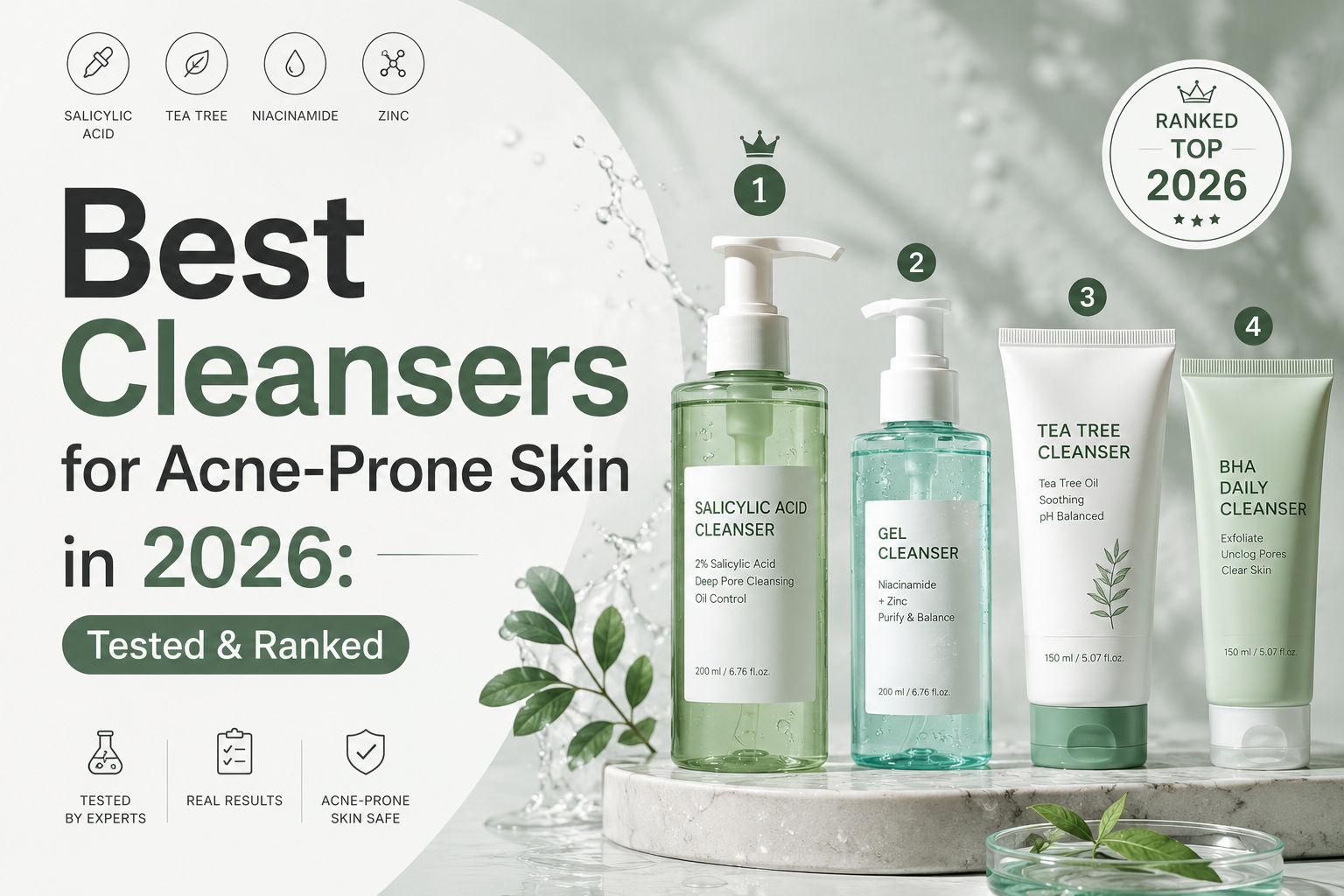
A cleanser can remove oil, sunscreen and makeup, but no single formula is “best” for everyone with acne-prone skin. This guide explains how to compare labels and decide when a gentle cleanser or an acne-treatment wash may make sense. Lady Life Magazine did not test or rank individual products for this article, so we have removed the previous rankings and performance claims.
Start with a gentle cleanser
The American Academy of Dermatology (AAD) recommends a gentle, non-abrasive cleanser and washing up to twice daily and after sweating. Use your fingertips, rinse with lukewarm water and avoid scrubbing. If a cleanser leaves your skin uncomfortable, that experience matters more than a marketing label.
When comparing basic cleansers, check whether the product is meant for facial use, whether it is fragrance-free if fragrance bothers you, and whether the instructions fit your routine. “Foaming,” “gel” and “cream” describe texture; none proves that a product will clear acne. A higher price does not establish better results.
When to consider an acne-treatment wash
Some washes contain active ingredients such as salicylic acid or benzoyl peroxide. The AAD’s guide to different acne types discusses these ingredients as options for some breakouts. An active wash is different from a basic cleanser: read its label for directions and warnings, and consider the other acne products you already use.
The U.S. Food and Drug Administration’s labeling guidance notes that dryness or irritation may be more likely when topical acne medicines are used together. That is a reason to avoid adding several new active products at once without guidance. A pharmacist or dermatologist can help you decide whether an ingredient fits your situation.
Questions to ask while shopping
- What is the product for? Is it an everyday cleanser, a makeup remover or an acne-treatment wash?
- What does the label say? Check active ingredients, directions, warnings and expiration date.
- How does your skin respond? Notice persistent dryness, stinging or discomfort, and stop using a product if you have a concerning reaction.
- What else are you using? Consider prescription treatments and other active skin-care products before adding another medicated wash.
- Can you use it consistently? A simple, affordable routine you can follow is more useful than a complicated shelf of products.
Do you need to double cleanse?
If you wear makeup, remove it before bed. The AAD’s makeup advice for acne-prone skin covers makeup removal and gentle washing. A separate oil or micellar step can be a personal preference, but it is not a universal requirement. Choose a method that removes what you wear without rubbing or repeatedly washing your face.
When to seek individual advice
A cleanser alone may not address persistent or painful acne. If breakouts continue, are leaving marks or scars, or you are unsure how to combine skin-care products with treatment, speak with a dermatologist. This article gives general shopping considerations; it is not a product trial, a diagnosis or an individual treatment plan.