- What Should You Look for in a Cleanser for Acne-Prone Skin?
- 6 Cleansers Worth Comparing for Acne-Prone Skin
- Vanicream Gentle Facial Cleanser
- CeraVe Foaming Facial Cleanser
- La Roche-Posay Toleriane Purifying Foaming Facial Cleanser
- CeraVe Hydrating Facial Cleanser
- CeraVe Acne Control Cleanser
- PanOxyl Acne Creamy Wash 4% Benzoyl Peroxide
- Gentle Cleansing Is a Good Starting Point
- Read the Whole Formula, Not Just the Featured Ingredient
- Gentle Cleanser vs. Medicated Acne Cleanser
- Check the Exact Product Before Buying Online
- Gel, Cream or Foaming Cleanser: Does Texture Matter?
- Gel Cleansers
- Cream and Lotion Cleansers
- Foaming Cleansers
- Cleansing Oils, Balms and Micellar Products
- What Does “Non-Comedogenic” Mean?
- Should You Use a Salicylic Acid Cleanser?
- What About a Benzoyl Peroxide Cleanser?
- How Often Should You Wash Acne-Prone Skin?
- Be Careful With Customer Reviews
- How to Compare the Price of Facial Cleansers
- Quick Cleanser Shopping Checklist
- Do You Need an Expensive Cleanser?
- When Should You Consider Seeing a Dermatologist?
- Frequently Asked Questions
- What type of cleanser is good for acne-prone skin?
- Is a foaming cleanser better for oily, acne-prone skin?
- Should acne-prone skin use a cleanser with salicylic acid?
- What is the difference between salicylic acid and benzoyl peroxide cleansers?
- Can washing your face more often prevent acne?
- Is an expensive cleanser better for acne?
- The Bottom Line
Finding the right cleanser for acne-prone skin can be surprisingly confusing. Drugstore and beauty shelves are filled with foaming washes, gentle gels, cream cleansers, exfoliating formulas, and medicated acne washes — often with very similar promises on the label.
But stronger does not automatically mean better.
For acne-prone skin, a cleanser should fit comfortably into your daily skincare routine, remove what you need it to remove, and avoid causing unnecessary dryness or irritation.
The American Academy of Dermatology recommends gentle cleansing for acne-prone skin and advises against harsh scrubbing.
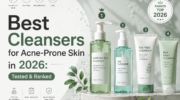
What Should You Look for in a Cleanser for Acne-Prone Skin?
Start with a simple question: What do you actually need your cleanser to do?
For many people, the primary job of a daily cleanser is to remove surface oil, sweat, dirt, sunscreen, and makeup without leaving the skin feeling excessively tight or irritated.
That is different from using a medicated acne cleanser designed to deliver an active ingredient such as salicylic acid or benzoyl peroxide.
A facial cleanser and an acne treatment are not necessarily the same thing.
If you already use prescription or over-the-counter acne treatments elsewhere in your routine, automatically choosing another medicated product may add unnecessary irritation.
6 Cleansers Worth Comparing for Acne-Prone Skin
There is no single cleanser that will be right for everyone with acne-prone skin. Skin type, sensitivity, existing acne treatments, makeup use, and texture preferences all matter.
The products below cover several common cleanser categories and can be useful starting points when comparing formulas. They are not presented as a hands-on ranking.
Vanicream Gentle Facial Cleanser
A straightforward option to compare if your skin is easily irritated or if you want a non-medicated cleanser while using acne treatments elsewhere in your routine.
Why consider it:
- Designed for sensitive skin.
- Useful when you want to keep the cleansing step simple.
- Does not add another acne-treatment active to the routine.
Before buying: Check the current ingredient list, bottle size, seller, and exact product version.
Check Price on AmazonCeraVe Foaming Facial Cleanser
A foaming everyday cleanser worth comparing if your skin tends to become oily but you do not necessarily want an acne-treatment active in your face wash.
Why consider it:
- Designed for normal-to-oily skin.
- Contains ceramides, niacinamide, and hyaluronic acid.
- Primarily an everyday cleanser rather than a medicated acne wash.
Before buying: Make sure the listing is for the standard Foaming Facial Cleanser and not one of CeraVe’s similarly named acne-treatment cleansers.
Check Price on AmazonLa Roche-Posay Toleriane Purifying Foaming Facial Cleanser
Another non-medicated foaming cleanser to compare if you prefer a cleanser aimed at normal-to-oily or combination skin.
Why consider it:
- Designed for normal-to-oily sensitive skin.
- Contains niacinamide and ceramides.
- Can fit a routine where acne treatment is handled by a separate leave-on product.
Before buying: La Roche-Posay sells several Toleriane cleansers, so check the exact product name and texture before ordering.
Check Price on AmazonCeraVe Hydrating Facial Cleanser
Worth comparing if your skin is prone to breakouts but also feels dry, tight, or uncomfortable after cleansing.
Why consider it:
- Designed as a hydrating daily cleanser.
- May fit routines already containing potentially drying acne treatments.
- Offers a less foamy cleansing experience than many oily-skin cleansers.
Before buying: Consider whether you personally prefer a creamier texture or a stronger foaming sensation.
Check Price on AmazonCeraVe Acne Control Cleanser
A medicated cleanser to compare if you specifically want a product containing 2% salicylic acid.
Why consider it:
- Contains 2% salicylic acid.
- Designed as an acne-treatment cleanser.
- May appeal to people specifically looking for a pore-focused acne wash.
Before buying: Review the rest of your routine before adding another exfoliating ingredient, especially if you already use acids, retinoids, or prescription acne products.
Check Price on AmazonPanOxyl Acne Creamy Wash 4% Benzoyl Peroxide
A treatment cleanser to compare if you are specifically shopping for a benzoyl peroxide wash rather than a basic everyday cleanser.
Why consider it:
- Contains 4% benzoyl peroxide.
- Belongs to the medicated acne-cleanser category.
- Useful to compare against stronger benzoyl peroxide washes.
Before buying: Check the strength carefully because PanOxyl sells different benzoyl peroxide products. Benzoyl peroxide may also bleach some fabrics, including towels and pillowcases.
Check Price on Amazon- Vanicream: gentle, non-medicated everyday option.
- CeraVe Foaming: everyday foaming cleanser for normal-to-oily skin.
- La Roche-Posay Toleriane: another foaming option for oily or combination skin.
- CeraVe Hydrating: worth comparing when acne-prone skin also feels dry.
- CeraVe Acne Control: medicated 2% salicylic acid cleanser.
- PanOxyl 4%: medicated benzoyl peroxide cleanser.
Gentle Cleansing Is a Good Starting Point
It can be tempting to assume that acne-prone skin needs the strongest possible cleanser. Dermatologists generally recommend a gentler approach.
The American Academy of Dermatology advises using a mild cleanser, applying it with your fingertips, and avoiding harsh scrubbing.
When comparing cleansers, look at characteristics such as:
- whether the cleanser is intended for daily use;
- whether it is a standard cleanser or a medicated acne wash;
- whether the formula contains fragrance;
- whether it is intended to remove makeup or sunscreen;
- active acne-treatment ingredients, if any;
- and directions for how often it should be used.
A cleanser that works comfortably and consistently in your routine may be more useful than an aggressive formula you stop using because it leaves your skin uncomfortable.
Read the Whole Formula, Not Just the Featured Ingredient
Skincare marketing often highlights a single ingredient on the front of the bottle. Salicylic acid, niacinamide, ceramides, hyaluronic acid, green tea, and other ingredients can all appear prominently in cleanser marketing.
But one featured ingredient does not tell you everything about how the complete formula will behave on your skin.
Check whether the product is:
- a standard daily face wash;
- an exfoliating cleanser;
- a medicated acne wash;
- a makeup remover;
- a hydrating cleanser;
- or a product designed for another specific purpose.
If you’re already using prescription acne medication or several acne-treatment products, adding more active ingredients is not automatically better.
Gentle Cleanser vs. Medicated Acne Cleanser
One of the most useful distinctions is between a basic everyday cleanser and a medicated acne cleanser.
Basic everyday cleansers include:
- Vanicream Gentle Facial Cleanser
- CeraVe Foaming Facial Cleanser
- CeraVe Hydrating Facial Cleanser
- La Roche-Posay Toleriane Purifying Foaming Facial Cleanser
Medicated acne cleansers include:
- CeraVe Acne Control Cleanser — 2% salicylic acid
- PanOxyl Acne Creamy Wash — 4% benzoyl peroxide
Neither category is automatically better. The right category depends on what the rest of your routine already contains and what you want your cleansing step to accomplish.
Check the Exact Product Before Buying Online
Beauty brands often sell several products with almost identical names.
Before purchasing, compare:
- the complete product name;
- bottle size;
- active ingredient and strength, if applicable;
- ingredient list;
- directions;
- seller;
- and packaging.
Don’t assume two listings are identical simply because the bottles look similar.
Gel, Cream or Foaming Cleanser: Does Texture Matter?
Texture can make a cleanser more or less enjoyable to use, but it shouldn’t be treated as a guarantee that a product will be better for acne-prone skin.
Gel Cleansers
Gel cleansers are common among products marketed toward oily and combination skin. Instead of assuming a gel formula is automatically best for breakouts, check whether it is a basic daily cleanser or a medicated acne wash.
Cream and Lotion Cleansers
Creamier cleansers are often marketed toward normal, dry, or sensitive skin. They may be worth considering when acne-prone skin also feels dry or easily irritated, especially when other products in the routine already contain potentially drying ingredients.
Foaming Cleansers
Some people simply prefer the feeling of a foaming cleanser. More foam, however, does not necessarily mean better cleansing or better acne control.
Cleansing Oils, Balms and Micellar Products
These products are often used to remove makeup and sunscreen. Check whether the manufacturer recommends rinsing the product and whether a second cleansing step is necessary for that particular formula.
What Does “Non-Comedogenic” Mean?
You will often see terms such as:
- non-comedogenic;
- oil-free;
- dermatologist tested;
- sensitive skin;
- gentle;
- acne-prone skin.
These claims can help narrow a large selection of products, but they cannot guarantee that every person will have the same experience.
Think of these labels as useful screening tools rather than promises.
Should You Use a Salicylic Acid Cleanser?
Salicylic acid is commonly used in over-the-counter acne products because it can help unclog pores.
A product such as CeraVe Acne Control Cleanser, for example, contains 2% salicylic acid. But not everyone with acne-prone skin needs salicylic acid in the cleansing step.
If you’re already using:
- a leave-on BHA or AHA;
- adapalene or another retinoid;
- benzoyl peroxide;
- prescription acne medication;
- or several exfoliating products,
consider the complete routine before adding another active ingredient.
What About a Benzoyl Peroxide Cleanser?
Benzoyl peroxide is another common over-the-counter acne ingredient. A wash such as PanOxyl 4% Benzoyl Peroxide Creamy Wash is an example of this category.
A benzoyl peroxide cleanser is not simply a “stronger face wash.” It is an acne-treatment product and should be used according to its directions.
If you are unsure whether benzoyl peroxide is appropriate for your acne or how to combine it with another treatment, a dermatologist or other qualified healthcare professional can help.
How Often Should You Wash Acne-Prone Skin?
More washing does not necessarily mean cleaner or clearer skin.
The AAD generally recommends washing acne-prone skin gently up to twice daily and after sweating, rather than repeatedly washing throughout the day.
- Use lukewarm rather than very hot water.
- Apply cleanser gently with your fingertips.
- Avoid aggressive washcloths or scrubbing tools.
- Rinse thoroughly.
- Gently pat your skin dry.
You can read the AAD’s face-washing recommendations here .
Be Careful With Customer Reviews
Online reviews can be valuable, but use them for the right purpose.
Reviews can help answer practical questions such as:
- Is the fragrance noticeable?
- Does the pump leak?
- Is the bottle convenient for travel?
- How thick or runny is the formula?
- Is the packaging easy to use?
What a customer review cannot prove is that the same cleanser will clear your acne.
How to Compare the Price of Facial Cleansers
A larger bottle isn’t always the better first purchase.
Compare the price by fluid ounce or milliliter rather than looking only at the total bottle price.
- shipping charges;
- one-time versus subscription pricing;
- bottle size;
- seller;
- return policy;
- and whether the listing provides complete product information.
Amazon prices can change frequently, which is why this guide does not list fixed prices.
Quick Cleanser Shopping Checklist
- Is this a basic daily cleanser or a medicated acne product?
- What exactly do I need it to remove?
- Does it contain an active ingredient?
- Am I already using that ingredient elsewhere?
- Does the exact label match the product I researched?
- Are the directions realistic for my routine?
- Is the bottle size sensible for a first purchase?
- Can I clearly identify the seller?
- Am I comparing the complete price rather than just a discount?
- Does the formula make sense alongside the rest of my skincare routine?
Do You Need an Expensive Cleanser?
Not necessarily.
Price doesn’t prove that a cleanser will work better for acne-prone skin.
What matters more is whether the cleanser:
- performs the job you bought it for;
- works comfortably in your routine;
- doesn’t cause unnecessary irritation;
- and is affordable enough to use consistently.
When Should You Consider Seeing a Dermatologist?
A cleanser can be part of a good skincare routine, but cleansing alone cannot address every type of acne.
If breakouts are persistent, painful, worsening, causing scars or dark marks, or aren’t improving despite appropriate over-the-counter care, consider speaking with a board-certified dermatologist or another qualified healthcare professional.
Frequently Asked Questions
What type of cleanser is good for acne-prone skin?
There isn’t one cleanser that works for everyone. A gentle cleanser appropriate for your skin type is often a reasonable starting point. Some people may also use medicated cleansers containing ingredients such as salicylic acid or benzoyl peroxide.
Is a foaming cleanser better for oily, acne-prone skin?
Not automatically. Foam describes the texture and cleansing experience rather than guaranteeing better acne control. Compare the complete formula and how your skin responds.
Should acne-prone skin use a cleanser with salicylic acid?
Salicylic acid is used in many acne products, but not everyone needs it in a cleanser. Consider the complete skincare routine, especially if you’re already using exfoliating ingredients or acne treatments.
What is the difference between salicylic acid and benzoyl peroxide cleansers?
They are different acne-treatment ingredients and work differently. Salicylic acid is commonly used to help unclog pores, while benzoyl peroxide is commonly used in products targeting acne-causing bacteria and inflammatory breakouts.
Can washing your face more often prevent acne?
Washing more often is not necessarily better and can irritate skin. Gentle cleansing is generally preferred over frequent scrubbing or repeated washing.
Is an expensive cleanser better for acne?
Price is not a reliable indicator of whether a cleanser will suit your skin. Formula, intended use, tolerability, and consistency matter more.
The Bottom Line
Choosing a cleanser for acne-prone skin doesn’t require finding the harshest, strongest, or most expensive formula.
Start by deciding what you need the cleanser to do.
If you simply need everyday cleansing, options such as Vanicream Gentle Facial Cleanser, CeraVe Foaming Facial Cleanser, CeraVe Hydrating Facial Cleanser, or La Roche-Posay Toleriane Purifying Foaming Facial Cleanser give you several textures and skin-type profiles to compare.
If you specifically want an acne-treatment cleanser, products such as CeraVe Acne Control Cleanser with 2% salicylic acid or PanOxyl Creamy Wash with 4% benzoyl peroxide belong in a different category and should be evaluated as active acne products.
Most importantly, think of your cleanser as one part of your overall skincare routine rather than expecting one wash-off product to solve every breakout.