

- Does Collagen Actually Work?
- Types of Collagen — Which Do You Need?
- Our Top Collagen Picks for Women
- 1. Vital Proteins Collagen Peptides — Best Overall
- 2. Sports Research Collagen Peptides — Best Value
- 3. Ancient Nutrition Multi Collagen Protein — Best Multi-Type
- 4. Garden of Life Grass Fed Collagen Beauty — Best with Extras
- 5. Momentous Collagen Peptides — Best for Joints
- How to Take Collagen for Best Results
- Frequently Asked Questions
- The Bottom Line
This post contains affiliate links. If you purchase through our links, we may earn a small commission at no extra cost to you.
Collagen is the most abundant protein in the human body — it’s what keeps skin firm, joints cushioned, hair strong, and nails from breaking. After 25, your body produces less of it every year. By 40, the decline is noticeable.
The collagen supplement market is flooded with products making big promises. Here’s what the science actually shows — and which products are worth your money in 2026.
Does Collagen Actually Work?
Short answer: yes, but with nuance. Multiple clinical studies show that collagen peptide supplementation (10g/day for 8–12 weeks) leads to measurable improvements in skin elasticity, hydration, and reduction of fine lines. Studies also show benefits for joint pain and bone density.
The key word is peptides — hydrolyzed collagen that’s broken down into small enough molecules to be absorbed. Regular collagen protein is largely broken down in digestion before it reaches your skin or joints.
Types of Collagen — Which Do You Need?
Type I: Most abundant, found in skin, hair, nails, and bones. Best for anti-aging and beauty benefits.
Type II: Found in cartilage. Best for joint health and mobility.
Type III: Found in skin and organs alongside Type I. Good for skin elasticity.
For most women: Types I and III together for skin/hair/nails. Add Type II if you have joint concerns.
Our Top Collagen Picks for Women
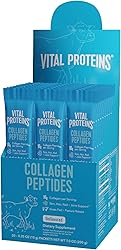
1. Vital Proteins Collagen Peptides — Best Overall
The most popular collagen supplement in the world for good reason. Grass-fed, pasture-raised bovine collagen, 20g per serving, unflavored and dissolves completely in hot or cold liquids. Types I and III. No additives, no fillers. Easy to add to coffee, smoothies, or water.
2. Sports Research Collagen Peptides — Best Value
Hydrolyzed Type I & III from grass-fed bovine. Third-party tested, NSF certified. 11g collagen per serving. Unflavored, mixes easily. Excellent absorption with added hyaluronic acid and vitamin C (both support collagen synthesis). Very competitive price per serving.

3. Ancient Nutrition Multi Collagen Protein — Best Multi-Type
Contains Types I, II, III, V, and X — sourced from multiple animals (bovine, chicken, fish, egg). If you want comprehensive coverage for skin AND joints, this is the most complete option. Available in vanilla and chocolate flavors.

4. Garden of Life Grass Fed Collagen Beauty — Best with Extras
Collagen peptides plus biotin, silica, vitamin C, and probiotics — all the nutrients that support collagen production and absorption. Unflavored, certified clean, grass-fed. A smart all-in-one choice if you want more than just collagen.

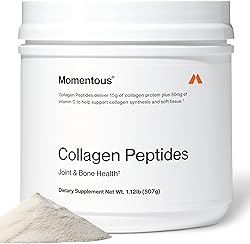
5. Momentous Collagen Peptides — Best for Joints
NSF Certified for Sport. Formulated specifically for joint health and recovery. Used by professional athletes. Includes vitamin C which is essential for collagen synthesis. Worth the premium price if joint mobility is your primary concern.
How to Take Collagen for Best Results
Dose: 10–15g per day is the clinically effective dose. Most studies used this range.
Timing: Doesn’t matter much — consistency is more important than timing. Many women add it to morning coffee.
With vitamin C: Vitamin C is required for collagen synthesis. Take it alongside vitamin C rich foods or a supplement.
Patience: Expect 8–12 weeks before seeing visible skin improvements. Joint benefits may come sooner (4–6 weeks).
Frequently Asked Questions
What age should I start taking collagen? Any time is beneficial, but the biggest impact is seen after 25 when natural production starts declining, and especially after 35–40.
Can vegans take collagen? True collagen is only animal-derived. Vegan “collagen boosters” contain nutrients that support your body’s own production (vitamin C, zinc, silica) but don’t contain actual collagen.
Does collagen make you gain weight? No. Collagen peptides are a protein with about 35–72 calories per serving. They may actually support satiety.
The Bottom Line
For most women: Vital Proteins or Sports Research — both are grass-fed, well-absorbed, and the best value. Want joints too: Ancient Nutrition Multi Collagen. Want added beauty nutrients: Garden of Life. Take 10–15g daily with vitamin C and give it 8–12 weeks.
Have you tried collagen supplements? Share your results in the comments!